

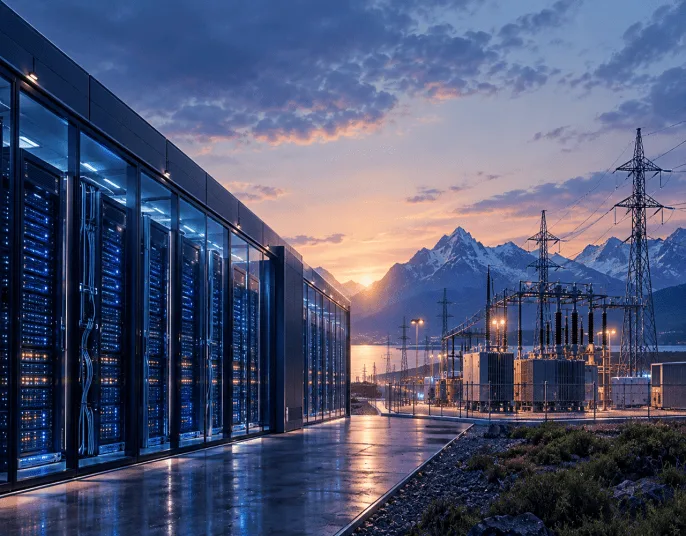
Strategic Shift: Owning the Foundation of AI Compute
As the artificial intelligence boom accelerates, companies are scrambling for access to high-performance GPUs. However, Clichmont is charting a different course. Rather than competing for rented GPU capacity, the firm is investing heavily in owning and operating the physical infrastructure that powers AI workloads. In an exclusive interview, CEO Alexis Cathalifaud explains why controlling data centers, power grids, and cooling systems may offer a more sustainable competitive edge than chasing scarce chips.
Key Points from the Interview
- Infrastructure ownership provides control over compute economics, not just access.
- Power, land, and connectivity are becoming more critical than GPUs themselves.
- Clichmont prioritizes energy-rich locations like Norway and Spain for strategic advantage.
- The $CLAI token plays a central role in the company’s ecosystem and monetization strategy.
Market Impact and Competitive Edge
Clichmont’s model diverges from competitors like CoreWeave and Crusoe, who focus primarily on renting GPU compute. Cathalifaud argues that while GPUs are essential, they depreciate quickly. In contrast, infrastructure assets such as substations, fiber networks, and power connections retain value across multiple generations of hardware. This approach positions Clichmont to scale more efficiently and adapt to evolving technological demands without being locked into short-lived hardware cycles.
By securing long-term energy contracts and strategically selecting sites based on power availability and climate efficiency, Clichmont aims to reduce operational risk and energy costs—two major pain points in AI infrastructure. This could provide a significant advantage as demand for AI compute continues to outstrip supply.
Outlook: Infrastructure as the New Bottleneck
The company’s expansion into regions like Bodø, Norway, and Alicante, Spain, highlights its focus on leveraging natural and energy resources. These locations offer not only renewable energy options but also favorable cooling conditions, reducing the environmental and financial cost of maintaining high-density computing facilities.
As AI development intensifies, the ability to deploy and sustain massive GPU clusters will increasingly depend on access to reliable power and scalable infrastructure. Clichmont’s strategy of owning these assets may prove to be a forward-thinking move, especially as energy scarcity becomes a more pressing issue than chip shortages.
Market context
Market data reflects conditions at publication time and is not updated in real time.
Data captured at: Sep 16, 2026 15:44 (Tehran)
Likely market impact
| Segment | Outlook |
|---|---|
| Bitcoin | ● Neutral |
| Ethereum | ● Neutral |
| Altcoins | ▲ Positive |
| Short term | ▲ Positive |
| Long term | ▲ Bullish |
Spot prices at publication
Fear & Greed Index
Chart
Source: NewsBTC