

Bitcoin Mining Difficulty Climbs Sharply
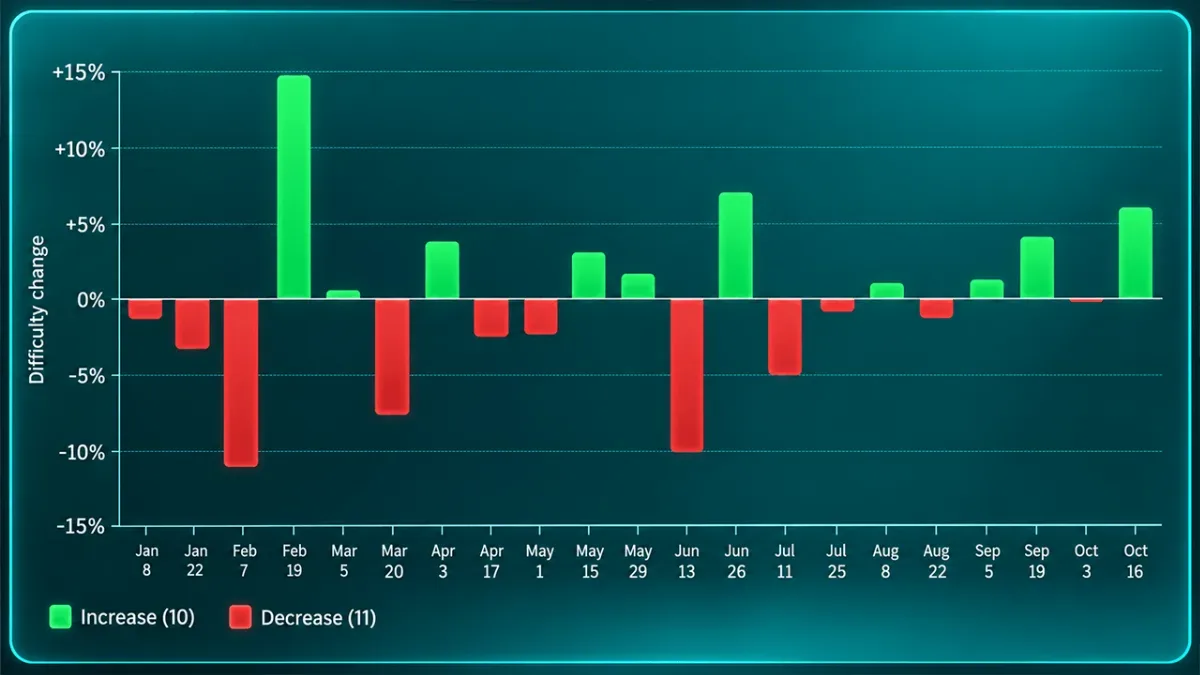
Bitcoin miners faced a significant increase in competition on Friday, as the network’s difficulty adjustment rose by 5.92%. This adjustment, which occurred at block height 971712, brought the difficulty to 140.58 trillion – a level not seen since March 5th.
The mining difficulty is a crucial metric that dynamically adjusts to maintain an average block time of approximately 10 minutes. A higher difficulty means miners require more computational power to solve the complex cryptographic puzzles needed to validate transactions and add new blocks to the blockchain. This latest increase suggests more hashpower is now competing on the network.
This 5.92% jump is the third-largest difficulty increase recorded so far in 2026. The adjustment is a direct response to the increasing number of miners participating in the network, driven by factors like rising Bitcoin prices and the profitability of mining operations. Increased hash rate generally correlates with network security, making it more resistant to attacks.
The difficulty adjustment mechanism is fundamental to Bitcoin’s stability. Without it, block times would fluctuate, potentially disrupting the network’s functionality. Miners continuously assess the current difficulty and adjust their strategies – including hardware investments and energy consumption – to remain competitive.
Market context
Market data reflects conditions at publication time and is not updated in real time.
Data captured at: Oct 16, 2026 23:24 (Tehran)
Likely market impact
| Segment | Outlook |
|---|---|
| Bitcoin | ▲ Positive |
| Ethereum | ● Neutral |
| Altcoins | ● Neutral |
| Short term | ● Neutral |
| Long term | ▲ Positive |
Spot prices at publication
Fear & Greed Index
Chart
Source: Bitcoin.com News