

Introduction
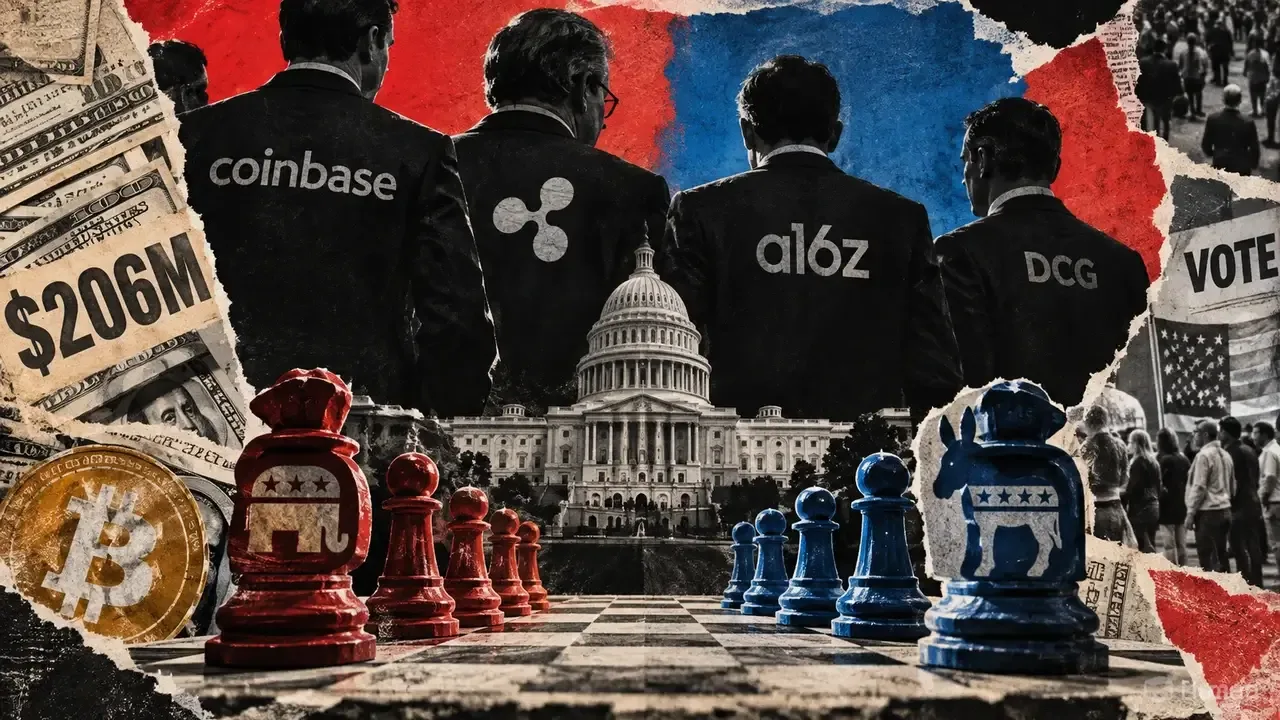
The 2026 midterm elections are witnessing an unprecedented influx of capital from the cryptocurrency industry. According to a recent analysis by Public Citizen, crypto corporations have disclosed $206 million in contributions to super PACs and hybrid PACs through the second quarter of the year. This figure not only eclipses traditional tech and finance sectors but also signals a strategic push to influence legislative outcomes that could shape the future of digital assets in the United States.
Key Political Vehicles and Funding Flows
The crypto political apparatus is fragmented across several distinct organizations, each with its own fundraising and spending objectives:
- Fairshake Network – The central committee anchoring the industry’s political network, reporting $137.9 million in receipts and $93.9 million in disbursements as of August 31. It has transferred $70 million to two partisan PACs: Defend American Jobs (Republican) and Protect Progress (Democratic).
- Defend American Jobs – Backed primarily by Republican candidates, it has received $37 million from Fairshake.
- Protect Progress – Supports and opposes Democratic contests, receiving $33 million, including a fresh $5 million transfer in early August.
- Stand With Crypto – Operates an endorsement and voter‑mobilization program independent of PAC spending, endorsing 38 House candidates this cycle.
- Fellowship PAC – Raised $11 million, with $10 million from Cantor Fitzgerald, and spent $4.45 million across 12 races.
- Digital Freedom Fund – Reported $22.4 million in receipts, but its independent expenditures were $0, highlighting a gap between fundraising and actual campaign spending.
Market Impact Analysis
The sheer scale of crypto political spending is already reverberating through market sentiment. Key observations include:
- Pro‑Crypto Legislative Push – The industry’s heavy investment suggests a coordinated effort to advance favorable legislation such as the CLARITY Act, stable‑coin banking frameworks, and clearer regulatory pathways for DeFi.
- Partisan Tilt – Independent expenditure trackers indicate that roughly 47 % of the $70 million spent by the Fairshake network supports Republican candidates, 31 % backs Democrats, and 22 % opposes Democrats. Notably, no recorded spending targets Republicans.
- Targeted Races – High‑profile contests like Alabama Senate candidate Barry Moore ($12.2 M) and Kentucky’s Andy Barr ($7.2 M) have become focal points for crypto money, while Illinois Senate candidate Juliana Stratton faced $9.7 M in opposition spending.
- New Commitments – A $30 million pledge announced in late September to oppose Ohio Democrat Sherrod Brown underscores the industry’s willingness to deploy additional resources in the final stretch of the cycle.
Analysts argue that this level of financial engagement could translate into tangible policy wins for the sector, potentially accelerating the adoption of pro‑blockchain legislation and reducing regulatory uncertainty. However, the concentration of funds on a single side of the political spectrum may also invite heightened scrutiny from consumer‑advocacy groups and regulators concerned about corporate influence.
Outlook and Potential Scenarios
Two primary scenarios emerge from the current data:
- Bullish Deployment – If Fairshake and its affiliates spend down a large share of their remaining $108 million cash reserve before November, independent expenditures could swell to $160‑$200 million. This would cement crypto as a decisive force in tight races, framing Bitcoin and market‑structure policy as central stakes in specific contests.
- Regulatory Backlash – Should the spending be perceived as overt political manipulation, lawmakers may respond with stricter disclosure requirements or even caps on corporate political contributions, potentially dampening future industry investment.
Investors and market participants should monitor the final weeks of the campaign for any surge in spending, especially in swing districts where the $30 million anti‑Brown pledge could tip the balance. The ultimate impact on crypto legislation will hinge on whether the industry’s financial leverage translates into concrete policy victories or triggers a regulatory counter‑reaction.
Market context
Market data reflects conditions at publication time and is not updated in real time.
Data captured at: Sep 22, 2026 12:25 (Tehran)
Likely market impact
| Segment | Outlook |
|---|---|
| Bitcoin | ▲ Bullish |
| Ethereum | ▲ Bullish |
| Altcoins | ▲ Bullish |
| Short term | ▲ Positive |
| Long term | ▲ Positive |
Spot prices at publication
Fear & Greed Index
Chart
Source: CryptoSlate