

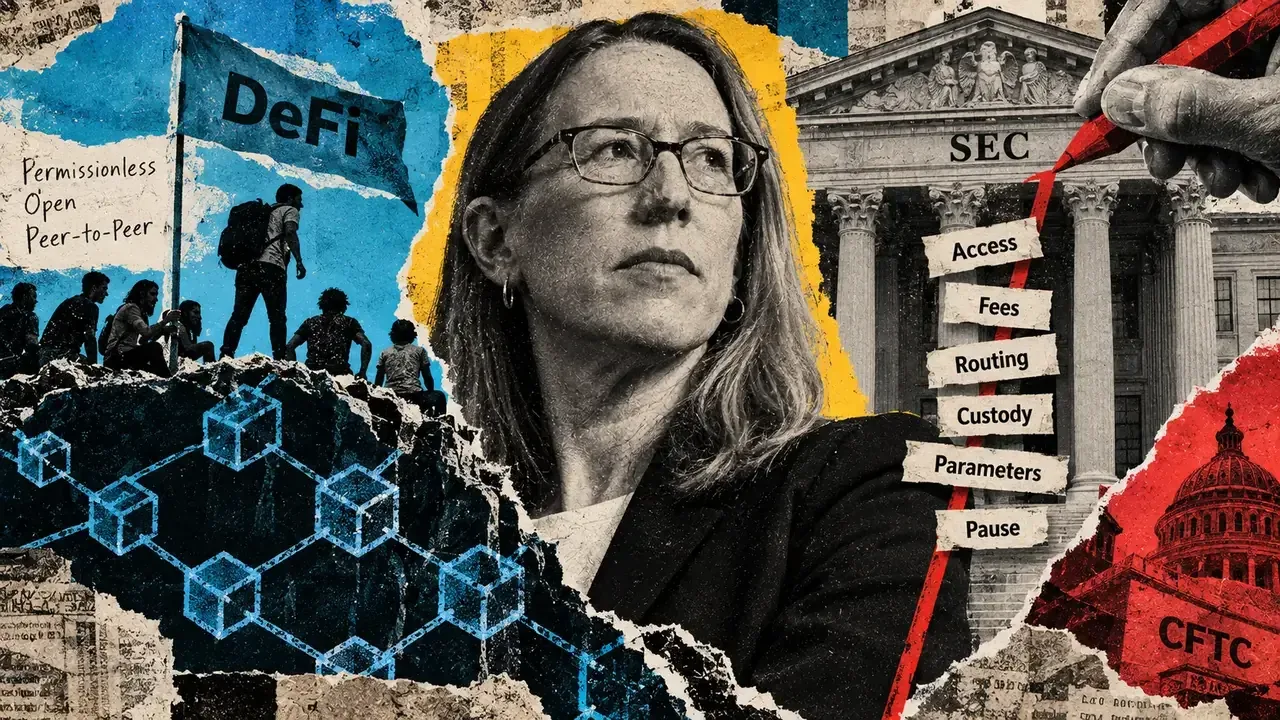
A decentralization test, not a blanket waiver
SEC Commissioner Hester Peirce has renewed the debate over how crypto regulation should distinguish genuinely decentralized finance from projects that retain concentrated control. Her central argument is straightforward: protocols that are truly decentralized should not need a bespoke legal exemption, because the regulatory analysis should follow who exercises meaningful authority rather than how a project describes itself.
This position does not imply that DeFi is automatically outside existing securities or commodities laws. Instead, it calls for a substance-over-form assessment. Code may execute transactions without direct human intervention, but custody arrangements, governance rights, access restrictions and the ability to change fees or routes can still point toward a central operator. Those operational realities matter more than an abstract claim of decentralization.
Control is the decisive factor
Peirce's framework places particular emphasis on several forms of authority. Custody determines who can access or move customer assets. Access controls determine who may participate. Routing mechanisms influence how trades reach liquidity, while fee-setting powers can reveal who benefits from the protocol. Perhaps most importantly, intervention powers show whether an individual or entity can alter the system after launch.
- A protocol with no party able to redirect assets or change core rules presents a stronger decentralization case.
- Centralized custody, selective access or discretionary fee changes can increase regulatory exposure.
- Governance rights must be assessed in practice, not merely by whether proposals are formally submitted to token holders.
- The ability to intervene in normal operations may indicate that control remains concentrated.
For market participants, the practical consequence is uncertainty around individual products. A DeFi service cannot rely on a generic label to settle the question. Its ownership structure, team responsibilities, smart-contract permissions and degree of community control all require examination.
Separate SEC and CFTC frameworks
The SEC and CFTC approach these questions through different legal frameworks. Actions involving custody, market access, routing and fees can therefore raise distinct regulatory considerations depending on the agency and the activity at issue. Peirce's argument is not that the two regulators have identical standards, but that existing laws can be applied to the actual structure and function of a protocol.
That distinction matters for companies designing DeFi products. Merely transferring decision-making to a token-based governance mechanism may not resolve regulatory risk if a smaller group retains effective control. Conversely, a system whose assets, routing and upgrade powers are genuinely distributed may be less dependent on claims that it deserves special treatment.
Market impact and investor implications
In the short term, Peirce's view is unlikely to produce an immediate shift in market prices or eliminate enforcement uncertainty. It is a regulatory argument rather than a binding rule, and neither the SEC nor the CFTC has announced a comprehensive DeFi classification framework based solely on this position. Investors should therefore avoid treating decentralization claims as a substitute for legal diligence.
Over the longer term, however, a control-based analysis could provide clearer expectations for developers and investors. Protocols that minimize centralized custody, preserve open participation and distribute upgrade authority may face less ambiguity about their regulatory status. Projects that continue to resemble intermediaries could see pressure to adjust their structures or obtain the approvals appropriate to their activities.
For decentralized finance more broadly, the argument offers a potentially constructive path: rather than seeking immunity from regulation, mature protocols can demonstrate that their architecture aligns with existing legal principles. That approach may improve institutional confidence, but only if decentralization remains real and verifiable.
Outlook
The coming regulatory test will likely focus less on slogans and more on operational control. Custody, access, routing, fees and intervention powers are concrete features that can be inspected. If regulators consistently apply that kind of analysis, genuinely decentralized DeFi could gain a more defensible position without requiring a new legal exemption. Until that standard is established, companies and investors should treat Peirce's argument as influential guidance, not settled protection.
Market context
Market data reflects conditions at publication time and is not updated in real time.
Data captured at: Sep 21, 2026 18:44 (Tehran)
Likely market impact
| Segment | Outlook |
|---|---|
| Bitcoin | ● Neutral |
| Ethereum | ● Neutral |
| Altcoins | ▲ Positive |
| Short term | ● Neutral |
| Long term | ▲ Positive |
Spot prices at publication
Fear & Greed Index
Source: CryptoSlate