

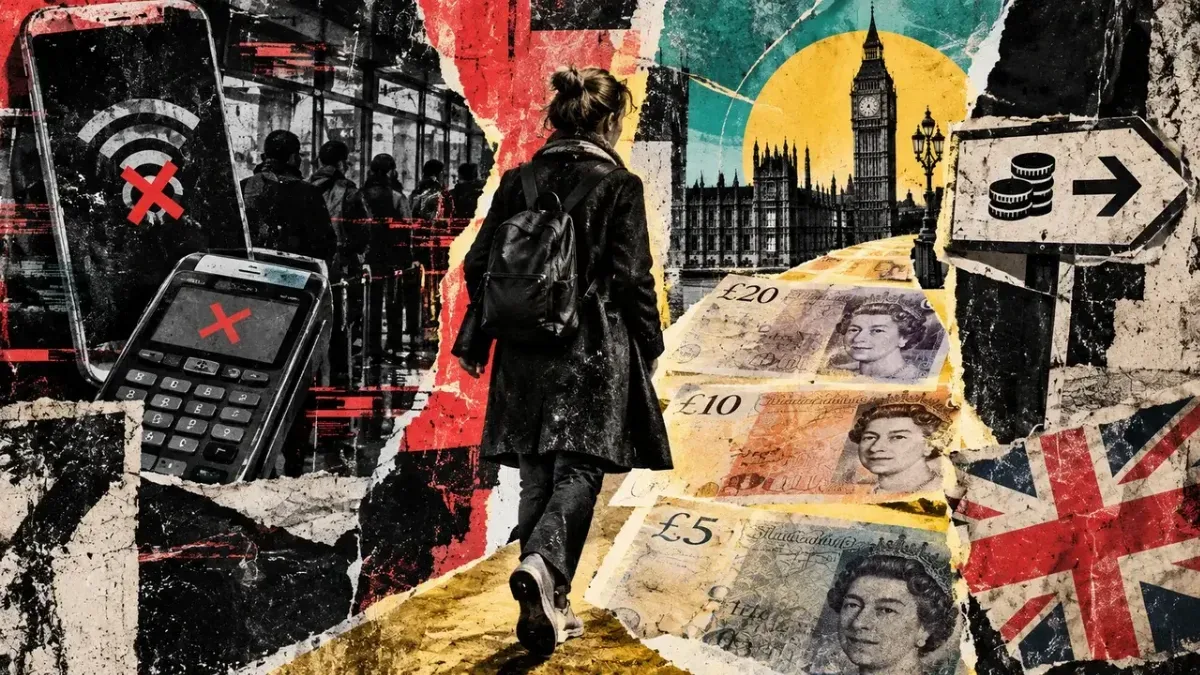
Cash as a Backup System
While digital payments dominate daily transactions, the Bank of England's September 17 bulletin reveals a striking contradiction: cash accounted for just 8% of UK payments in 2025, down from 58% in 2009. Yet the nominal value of banknotes on its balance sheet nearly doubled, reaching £99 billion, with £94 billion now held by the public in Britain and overseas. Inflation and international holdings complicate the picture, but the trend is unmistakable—people use cash less frequently yet still want to own it.
The Practical Value of Independence
Cash eliminates dependencies on power grids, network connectivity, or institutional approval. When card readers fail or apps crash, physical currency remains functional. The Dutch National Forum on the Payment System recommends households maintain €70 per adult and €30 per child for emergencies, emphasizing preparedness for three days of disrupted electronic payments. Privacy also drives demand: cash transactions leave no digital trail, appealing to those seeking financial autonomy beyond corporate databases.
Crises Drive Demand
The European Central Bank's research links cash surges to crises like the 2008 financial crash, Greece's debt crisis, the pandemic, and Ukraine's war. During Spain and Portugal's April 2025 blackout, cash usage spiked despite closed shops. ECB studies confirm cash fills gaps when digital infrastructure falters, though it cannot restore power or fuel supplies. This limitation defines cash's role: removing one transaction dependency to sustain daily life during partial system failures.
Gold as an Alternative Hedge
Concerns about currency stability push some toward physical gold. The World Gold Council reported a 16% increase in global bar and coin demand in 2025, reaching 1,374 tonnes—the highest since 2013. Demand surged in China and the Middle East amid geopolitical tensions, though U.S. investors reduced purchases. Gold offers currency independence but carries liquidity risks and storage costs, making it a distinct hedge from cash's transactional utility.
Permissionless Money's Enduring Appeal
The UK's cash paradox reflects a broader truth: permissionless money retains value even in a digital age. As reliance on centralized systems grows, so does the desire for alternatives that function independently. Whether through cash reserves or gold holdings, individuals seek tools to navigate systemic vulnerabilities—proof that the world still craves financial autonomy beyond institutional control.
Market context
Market data reflects conditions at publication time and is not updated in real time.
Data captured at: Sep 26, 2026 15:50 (Tehran)
Likely market impact
| Segment | Outlook |
|---|---|
| Bitcoin | ● Neutral |
| Ethereum | ● Neutral |
| Altcoins | ● Neutral |
| Short term | ▲ Positive |
| Long term | ▲ Positive |
Spot prices at publication
Fear & Greed Index
Source: CryptoSlate